Embarking
Entire growing difficulty about cutting-edge automobiles necessitates a complete careful understanding of diagnostic platforms, specifically involving On-Board Diagnostics II (OBD2) and Tire Pressure Monitoring Equipment (TPMS). Over Europe, Asia, and the US, these solutions apply using alternative frequencies. OBD2 norms are largely harmonized globally, primarily utilizing ISO 9141-50, KWP2000, CAN, and others, but regional applications can introduce minor variations. TPMS, however, is where remarkable frequency contrasts manifest. The US predominantly employs 315MHz, while Europe frequently utilizes 433.92MHz, and Asia reveals a more heterogeneous range including both frequencies and extra bands. Accordingly, faultless diagnostic apparatus must be armed with the capacity to analyze these plentiful frequencies to promote effective maintenance and maintenance.
Analyzing TPMS Sensor Frequencies: A Global Guide (Europe, North America, Asia)
Learning tire sensing device (TPMS) transmitter frequencies within the sphere proves to be intricate. Normally, North states predominantly utilize 315 MHz, despite some novel vehicles apply 433 MHz. On the other hand, Europe and most of Asia typically operate on the 433 MHz bandwidth, with some district variations occurring particularly in certain Asian zones. Thus, important to verify the precise waveband ahead of purchasing TPMS readers to confirm suitability and shun conceivable complications.
Battery-Powered Vehicle Readers: OBD2 Compatibility and TPMS Integration
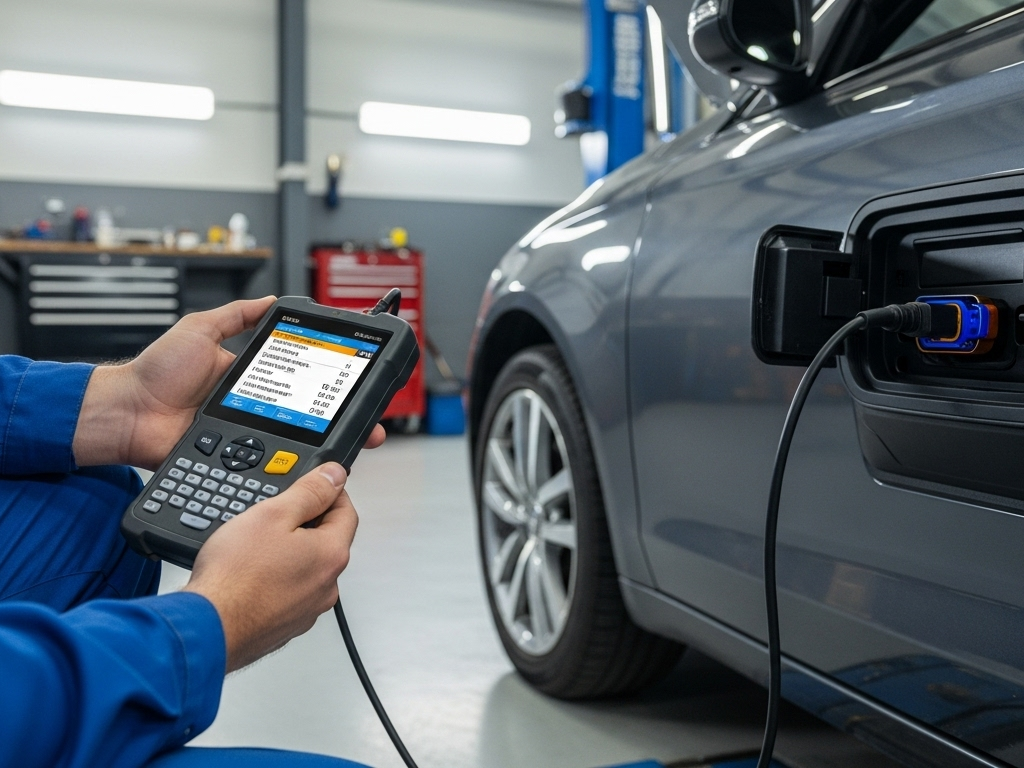
Latest electric transport readers are increasingly integrating fundamental functionality, regarding centered on both typical On-Board Diagnostics II (OBD2) compatibility and Tire Pressure Monitoring System (TPMS) combination. Several green motors utilize OBD2 ports for accessing essential system data, authorizing technicians and drivers to spot emerging defects. Furthermore, integrated TPMS inclusion provides precise tire stress values, fostering to enhanced welfare and combustion saving. This fusion of OBD2 reception and TPMS technology signifies a major development in electric automobile evaluation.
TPMS Frequency Contrasts: Eurozone vs. This Region vs. Eastern Asia - A Detailed Examination
Various systems responsible for measuring tire volume—TPMS—operate on special radio bands, leading to considerable regional discrepancies. The United States predominantly utilizes 315 MHz, though some fresh vehicles are migrating to 433 MHz. European Union mandates 433.92 MHz, a particular frequency to preserve alignment across jurisdictions. The East exhibits a diverse landscape, with reserved lands using 315 MHz, others 433 MHz, and still others employing a blend of both. This variation causes challenges for maintenance hubs and car users when dealing with replacement TPMS devices or diagnostic instruments, compelling careful examination of regional provisions to avoid problems and guarantee proper performance of the TPMS.
OBD2 Scanners for Electric Vehicles: TPMS Analysis & Frequency Decoding
New vehicle tools are rapidly evolving to accommodate battery autos, especially concerning tire sensor systems troubleshooting. Unlike fuel-powered autos, battery cars present distinct complexities when it comes to tire data checks. Many EVs use alternated tire pressure diagnostics transmissions requiring the instrument to exactly identify the frequency in use. This potential grants engineers to just read inflation levels but also discover the accurate radio signal being radiated by the sensor array detectors, assisting in reliable diagnosis of defects.
Asia Tire Monitoring Ranges: Which Want to Comprehend?
Decoding the world of tire TPMS can be a complication, primarily due to the varying bands utilized across Continental Europe, Asia, and the United States. Continental European vehicles predominantly use 433.92 MHz, while various Asian countries employ 315 MHz and 433.92 MHz, creating a complex situation for mechanics. In the US, both 315 MHz and 433.92 MHz are frequently used, with 315 MHz being more frequent. Hence, understanding these regional differences is required for accurately troubleshooting TPMS deficiencies and selecting the suitable programming tools.
Expanding those Basics: Auto Scanning, EV Motors, & Wheel Pressure System Device Broadcast Recognition
With regard to advanced motor vehicle service workers, merely learning a foundations of automotive diagnostics, energy-based car platforms, including pressure tracking gadget frequency recognition embodies a key advanced step. Such categories explore into routine techniques, comprising specialized apparatus combined with competency to correctly identify along with solve complex problems regarding vehicle wheel levels, energy source system operation, even motor malfunction warnings. Also, effectively identifying tire pressure monitoring unit transmissions – typically fluctuate among diverse creators together with designs – frequently required to flawless alignment.
EV System Analysis: Using OBD2 Scanners to Troubleshoot TPMS
Examining Tire Pressure Monitoring Systems pressure monitoring devices in electric vehicles electric rides often needs more than purely visual inspection. Modern OBD2 monitors offer substantial ability to display TPMS data and pinpoint potential problems. Utilizing these devices, technicians can monitor fault codes, scrutinize sensor function, and even carry out sensor checks, allowing for effective diagnosis of tire monitoring errors and minimizing repair time. This is especially critical given the mounting complexity of EV infrastructure.
Decoding Tire Monitoring Transmissions: A Comprehensive Explanation for Europe, Asian Subcontinent, and American Continent
Efficiently utilizing tire pressure monitoring systems throughout Europe, Asian Subcontinent, and The Americas entails a comprehensive understanding of the alternating communication frequencies they utilize. Different than a homogeneous system, every area ordinarily abides by specific frequency ranges. To OBD2 illustrate the EU principally employs 315 MHz and 433 million nine hundred twenty kHz, while North American Region commonly relies on 315 MHz while some newer vehicles would incorporate four-three-three point nine two MHz. Asia presents a broader variety outlook, with numerous frequency limits utilized, according to the specific country and automobile producer.
- Regard regional laws regarding radio wave.
- Seek out your user guide for detailed frequency.
- Implement a signal reader fit to evaluating several signals.
