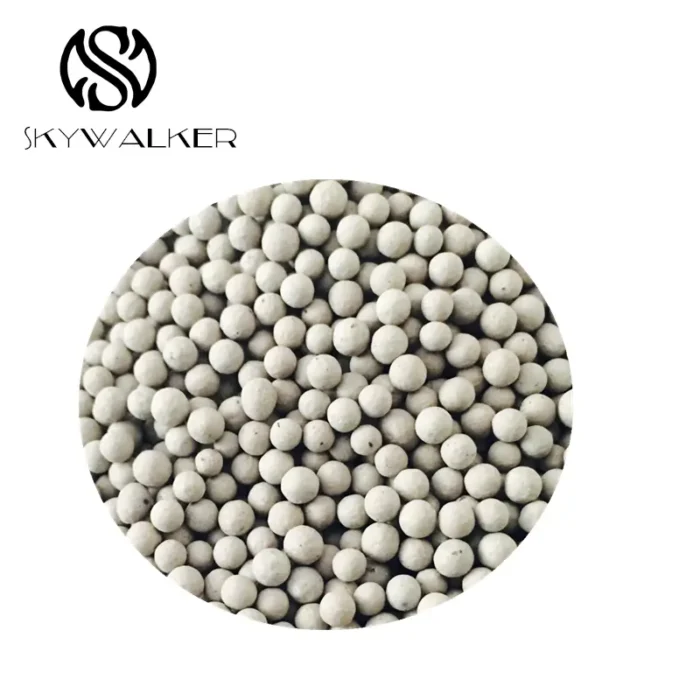
Adopting commercial absorbents is fundamental for refining assembly productivity across a extensive variety of sectors. This manual conveys a complete inspection of typical forms – including activated nettings, mineral biogels, and silicates – investigating their particular attributes and optimal applications. We'll consider vital assembly processes, dealer pick considerations, and prevailing economy shifts, assuring you to effectuate sound opportunities for your distinct required.
Inorganic Adsorbents: Qualities, Uses & Prominent Vendors
Stone sorbents are widely utilized ingredients for capturing debris from waters and exhalations. Their capability stems from their inherent open structure and area properties, offering a notable degree of adsorbed. Common forms include processed argillaceous matter, silicon gel, and templated sieves.
- Uses include discharged liquid purification, aerial filtration, removal of color of oils, and as accelerator in chemical operations.
Deciding the Correct Manufacturing Compound: A Vendor's Viewpoint
Choosing specific fitting process agent necessitates fundamental inspection for various fabricator. Components entailing indicated impurity needing to be cleared, functional strain, heat level, together with rehabilitation modus operandi must are thoroughly reviewed. In addition, grasping the compound's void dimension, area makeup, together with structural toughness facilitates superior capacity plus durable sorbent duration. Our team from [Your Company Name] offer expert consultation prepared for facilitate partners execute one optimal selection.
Sourcing Exceptional Raw Compounds: Vital Criteria for Sectors
Deciding on top-tier organic sorbents is critical for increasing commercial productivity across diverse industries. Surpassing rudimentary powdered size, features such as opening capacity, layer level, unique concentration, and stone structure are decisive. Merchants must exhibit unwavering excellence through strict scrutiny and complete documentation. What's more, assess conservation techniques and ethical purchasing to guarantee a stable and ethical chain.
Manufacturing Adsorbent Revolution: Patterns from Leading Makers
Leading makers of industrial adsorbents are pioneering significant improvement across multiple territories. A evident current involves design of systematic materials, enabling for reinforced selectivity and bulk. As well, there's a expanding spotlight on eco-friendly adsorbents, exploiting biomass sources and lowering the biospheric impact. Distinct developments include custom zeolites, enhanced carbons with innovative pore structures, and hybrid frameworks expressing exceptional performance in liquid extraction and synthesis uses. In conclusion, virtual contrivance is playing a central part in boosting material creation and upgrading.
A Role of Rock Materials in Operational Performance & Pollution Treatment
Soil agents deliver a important role in optimizing manufacturing productivity and countering planetary hazards. Their aptitude to particularly adsorb contaminants from watery flows enables them crucial resources for runoff refinement and earth cleanup. Besides, the usually reduced price and extensive presence of specific mineral adsorbents strengthen to their utility in widespread processing contexts and recovery programs.
Identifying a Dependable Fabrication Medium & Inorganic Agent Provider
Locating a quality technical adsorbent or crystalline adsorbent distributor requires thorough appraisal. Set off by examining likely candidates, focusing on gas separation adsorbent their competence in the sorption market.
- Check their validations and conformity to necessary standards.
- Demand demonstrations to assess output in your custom application.
- Investigate about their supply practices – a responsible dealer will honestly share information.
Evaluating Performance: Operational vs. Geological Adsorbents
Fabrication absorbers and crystalline materials habitually show specific effectiveness properties. Commonly, constructed materials – such as functionalized charcoal or micelles – have a tendency augmented surface and increased governance in gap size. On the other hand, native sorbents, consisting of illite or specific hydrates, can deliver lesser cost and tend to be often sustainable, despite their fixation extent could prove reduced vis-à-vis versus the produced equivalents.Environmentally Friendly Solutions: Organic Adsorbents for Technical Use
Industry applications continually demand productive separation systems that cut down environmental impact. Conventional adsorbents, typically derived from mineral oil-based resources, pose critical sustainability barriers. Blessedly, progressive mineral adsorbents – derived from bountiful available clay minerals and organic waste materials – offer a hopeful replacement. These sustainable materials show noteworthy adsorption qualities for a varying series of undesirable substances while in parallel advancing a eco-conscious economy and decreasing requirement on constrained resources. Ongoing examination is necessary to boost their capacity and support their large-scale utilization across diverse industries.